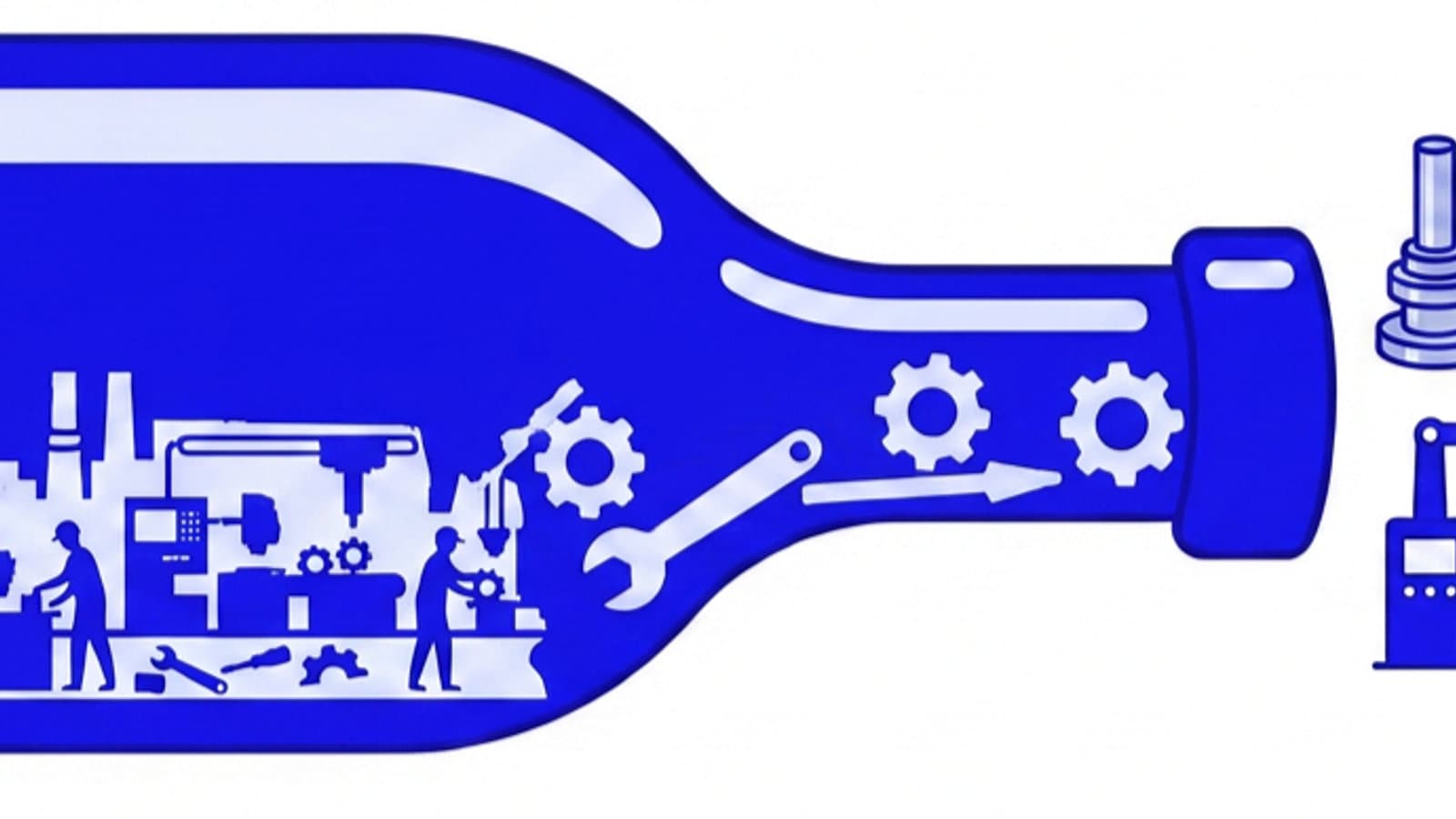
A joinery or kitchen workshop is one of the hardest environments to run productively. You're juggling dozens of jobs at once — five kitchens at three stages each is fifteen states to track — and every job is custom. Productivity leaks are everywhere, but because the floor is busy and the work is varied, they're hard to see. Here's a practical playbook for lifting output without cutting quality.
Why joinery productivity is uniquely hard
Unlike a production line making the same part all day, a joinery shop runs small-batch, multi-stage, custom work in parallel. A typical job moves through design, machining, assembly, finishing, and often install — and at any moment you've got jobs at every stage at once. That parallelism is what makes the work interesting, and what makes productivity so easy to lose track of.
Step 1 — Get every job and stage onto one board
The first fix is visibility. If your only view of the floor is a whiteboard and the scheduler's memory, you can't see where work is queuing. Get every live job and its current stage into one place everyone can see. The bottleneck — usually the spray booth or assembly bay — becomes obvious immediately.
Step 2 — Track time by stage, not just by job
'That kitchen took 80 hours' isn't useful. 'That kitchen took 18 hours in design, 22 machining, 26 assembly, and 14 finishing — against a quote that assumed 12 for finishing' is gold. Tracking time by stage shows you exactly where jobs blow out, so you can quote and schedule each stage accurately next time.
- Design — where scope creep and revisions hide
- Machining — usually predictable, a good baseline
- Assembly — where complexity surprises you
- Finishing — the most common bottleneck, and the hardest to rush
- Install — off-site time that's notoriously under-tracked
Step 3 — Attack the finishing bottleneck
In most joinery shops, finishing — spray, lacquer, sand — is the scarce resource everything queues behind. You can't make a spray booth go faster, but you can stop starving and flooding it. Scheduling upstream stages so work arrives at finishing in a steady flow, rather than four jobs landing at once on Thursday, recovers more output than almost anything else.
Step 4 — Keep the floor cutting from the right drawing
Custom joinery lives and dies on revisions. A client signs off a change, but the floor is still cutting from last week's set — and now you've got an expensive remake. Make sure the current drawing is attached to the job and the floor always works from the latest version. The hours you save on avoided remakes go straight to the bottom line.
Step 5 — Quote the next kitchen from the last ten
Every kitchen you quote is a prediction of hours. If that prediction comes from gut feel, you'll keep underquoting the complex ones. Once you're tracking time by stage across jobs, you can quote from real history — 'our last ten kitchens of this size averaged 84 hours, here's the spread' — and price for margin with confidence.
What it's worth: real joinery results
This isn't theoretical. NZ joinery and cabinet shops running this playbook with Empower have seen it pay off:
- Peppertree Furniture — a 46% productivity gain in 10 weeks
- Halswell Timber — a 25% increase in factory productivity
- Comseat Furniture — around $120,000 saved per year in wages
46%
Productivity gain at Peppertree Furniture in 10 weeks
Start with visibility
You don't have to do all five steps at once. Start with the first two — get every job and stage visible, and start tracking time by stage. That alone surfaces the bottleneck and the biggest quoting errors. Fix those, and the gains compound from there.
In a joinery shop, you're not short on hours — you're short on knowing where they go.